
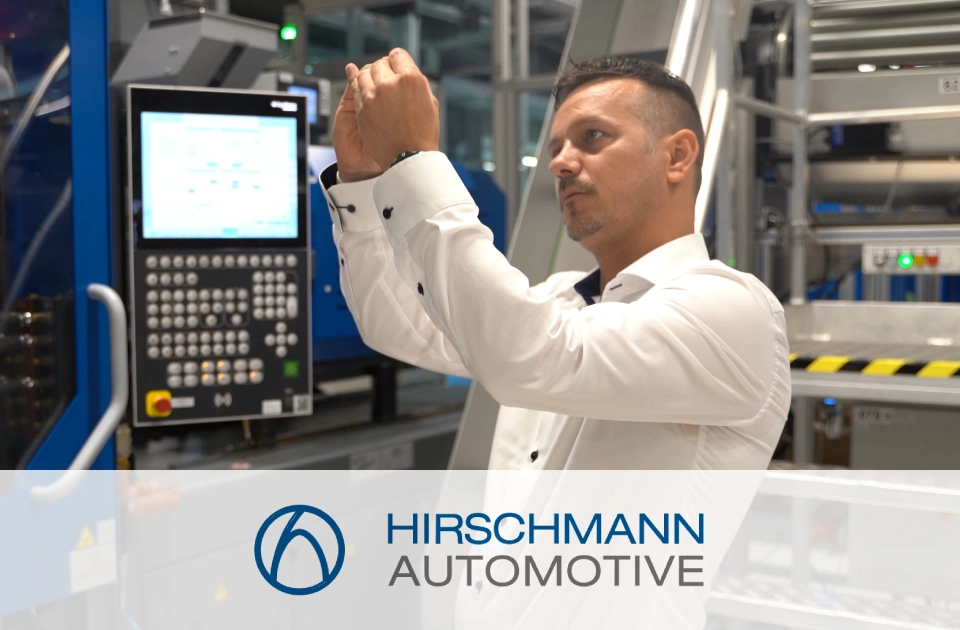
In the time-critical automotive manufacturing industry, how do you strike a balance between “extreme precision” and “mass production speed”? Austrian leader Hirschmann Automotive provides the answer. For them, simulation analysis has long transcended simple “troubleshooting”—it is a core strategy for enhancing product competitiveness.
Hirschmann’s flagship products—such as connectors, sensors, and wiring harness systems—rely heavily on multi-component and electromechanical integrated designs. The most difficult challenge for these products is Overmolding.
Katzen Sascha, Team Leader of Moldflow Simulation, points out that this is not just simple plastic injection, but involves the precise combination of metal and electronic components. Moldex3D’s high-precision prediction capabilities in the overmolding process became Hirschmann’s winning point:
Now, mold flow analysis is fully integrated into Hirschmann’s DFM (Design for Manufacturing) process, becoming a daily standard for engineers. This not only significantly reduces mold modification costs but also brings two major advantages to quality management:
Simulation should not just be a tool for troubleshooting; it is a strategic investment in design quality, process efficiency, and cost control.
— Katzian Sascha, Team Leader Moldflow Simulation, Hirschmann Automotive
Hirschmann’s pace of digitalization has not stopped. Looking ahead, they plan to further combine AI-driven optimization with real production data, utilizing Moldex3D to continuously shorten Time-to-Market and maintain a lead on the path of digital transformation.

Iscriviti alla nostra newsletter
